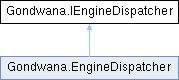
Defines a contract for dispatching actions to the engine's background thread in a thread-safe manner. Implementations of this interface provide mechanisms for posting work items from any thread to be executed on the engine's dedicated update loop thread, ensuring thread-safe access to engine state.
More...
Defines a contract for dispatching actions to the engine's background thread in a thread-safe manner. Implementations of this interface provide mechanisms for posting work items from any thread to be executed on the engine's dedicated update loop thread, ensuring thread-safe access to engine state.
The dispatcher pattern allows external code to safely interact with engine state by queueing actions that will be executed on the correct thread during the engine's update cycle. This is essential for maintaining thread safety when multiple threads need to modify or access engine resources.
| void Gondwana.IEngineDispatcher.BindToCurrentThread |
( |
| ) |
|
Binds this dispatcher to the current thread, establishing it as the engine thread. This method should be called once during engine startup from the thread that will run the engine's main update loop.
After binding, the dispatcher can identify whether subsequent calls are being made from the engine thread, enabling optimizations such as inline execution of actions posted from the engine thread itself.
Implemented in Gondwana.EngineDispatcher.
| void Gondwana.IEngineDispatcher.Drain |
( |
| ) |
|
Executes all queued actions that have been posted to this dispatcher since the last call to Drain. This method should be called regularly by the engine's main update loop to process pending work items.
This method should only be called from the engine thread to maintain thread safety guarantees. It processes actions in the order they were posted (FIFO), executing each one until the queue is empty.
Implementations should handle exceptions thrown by actions appropriately to prevent disruption of the engine's main loop.
Implemented in Gondwana.EngineDispatcher.
| void Gondwana.IEngineDispatcher.Post |
( |
Action | action | ) |
|
Posts an action to be executed on the engine thread. Implementations may execute the action inline if already on the engine thread, or queue it for later execution during the engine's update cycle.
- Parameters
-
| action | The action to execute on the engine thread. Implementations should handle null gracefully by ignoring the request. |
This method is thread-safe and can be called from any thread. The exact timing of action execution depends on the implementation, but queued actions are typically executed during the next call to Drain on the engine thread.
Implemented in Gondwana.EngineDispatcher.
| bool Gondwana.IEngineDispatcher.IsOnEngineThread |
|
get |
Gets a value indicating whether the current thread is the engine thread to which this dispatcher is bound.
true if the current thread is the engine thread; otherwise, false.
This property can be used to optimize action execution by running actions inline when already on the engine thread, avoiding unnecessary queueing overhead. It also allows external code to determine if thread-safe access to engine state is required.
Implemented in Gondwana.EngineDispatcher.